Nerovet AI Dentistry: Revolutionising Modern Dental Care
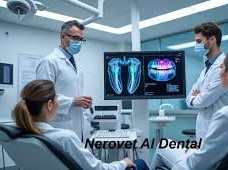
In recent years, the intersection of healthcare and technology has accelerated rapidly, and dentistry is no exception. One of the most promising innovations in this field is Nerovet AI Dentistry, a cutting-edge artificial intelligence system designed to enhance dental care, streamline clinical workflows, and improve patient outcomes. This article explores how Nerovet AI Dentistry works, its benefits, potential challenges, and the future of AI-powered dental care.
What is Nerovet AI Dentistry?
Nerovet AI Dentistry is an advanced platform that utilises artificial intelligence to analyse dental images, predict disease progression, and assist dentists in treatment planning. Unlike traditional methods, which rely heavily on the subjective evaluation of dental professionals, AI introduces a layer of precision, consistency, and speed. The system uses sophisticated algorithms capable of recognising patterns in intraoral scans, X-rays, and three-dimensional CBCT scans.
By processing vast amounts of dental data, Nerovet AI Dentistry identifies early signs of dental issues such as cavities, gum disease, enamel erosion, micro-fractures, and even oral cancers in some advanced models. This predictive approach ensures that problems can be addressed before they escalate, ultimately saving patients from extensive procedures and improving overall oral health.
How Nerovet AI Dentistry Works
Image Analysis and Diagnostics
The core function of Nerovet AI Dentistry lies in its ability to analyse dental images with exceptional accuracy. Using machine learning models trained on thousands of anonymised cases, the AI can detect minute anomalies that might be overlooked by the human eye.
The process begins when a dentist uploads a patient’s images or scans to the platform. The AI then evaluates the images, identifying areas of concern and generating a detailed report. These reports often include visual heatmaps that highlight problematic regions, making it easier for dental professionals to interpret the findings.
Predictive Modelling
Beyond diagnostics, Nerovet AI Dentistry employs predictive modelling to estimate the likelihood of disease progression. For instance, if early-stage gum disease is detected, the AI can forecast potential outcomes and recommend preventive measures. This predictive capability allows dentists to implement more targeted and personalised treatment plans.
Treatment Planning Assistance
AI-assisted treatment planning is one of the most transformative features of Nerovet AI Dentistry. By analysing patient history, current oral health status, and predictive models, the system suggests optimal treatment strategies. While dentists remain the final decision-makers, the AI provides data-driven insights that reduce human error and enhance the effectiveness of interventions.
Benefits of Nerovet AI Dentistry
Enhanced Accuracy and Early Detection
One of the primary advantages of using Nerovet AI Dentistry is its ability to detect dental problems early. Studies have shown that early diagnosis significantly improves treatment outcomes and reduces the risk of complications. With AI’s precision, even subtle signs of decay or tissue inflammation can be identified, enabling proactive care.
Improved Patient Experience
Patients often experience anxiety related to dental visits. By providing visual representations of their dental conditions, Nerovet AI Dentistry helps patients understand their oral health better. This transparency fosters trust between patients and dentists and can increase adherence to treatment recommendations.
Streamlined Clinical Workflow
Time management is critical in dental practice. AI-driven tools like Nerovet help automate time-consuming tasks such as image analysis and record-keeping. By handling repetitive tasks, dentists can focus more on patient interaction and clinical decision-making, improving the overall efficiency of the practice.
Personalised Treatment Plans
Every patient’s dental profile is unique. Nerovet AI Dentistry takes into account patient-specific data to suggest personalised treatment options. This approach ensures that interventions are tailored to individual needs, increasing the likelihood of successful outcomes and minimising unnecessary procedures.
Challenges and Considerations
While the benefits of Nerovet AI Dentistry are significant, there are important challenges to consider.
Data Privacy and Security
Handling sensitive patient data requires strict adherence to privacy regulations. Dental practices must ensure that all images and patient records processed by AI systems are encrypted and stored securely. Compliance with regulations such as GDPR in the UK is essential to protect patient information.
Reliability and Accuracy
Although AI systems are highly accurate, they are not infallible. Misdiagnoses or false positives can occur if the AI is not properly trained or if input data is of poor quality. It is crucial that dental professionals verify AI-generated reports and maintain the human oversight that ensures patient safety.
Ethical and Legal Implications
The integration of AI in healthcare raises ethical and legal questions. Dentists remain responsible for clinical decisions, and AI should be viewed as an assistive tool rather than a replacement. Practices must also be transparent with patients about the use of AI in their care.
Cost of Implementation
Investing in AI technology can be costly for smaller practices. Although the long-term benefits often outweigh the initial expenditure, dental practices must carefully evaluate the financial implications before integrating Nerovet AI Dentistry into their workflow.
Future of AI in Dentistry
The potential of AI in dentistry extends far beyond current capabilities. Future developments may include fully automated diagnostic systems, real-time monitoring of oral health, and predictive analytics that integrate lifestyle, diet, and genetic factors.
As Nerovet AI Dentistry and similar platforms evolve, the role of the dentist is likely to shift from manual diagnosis to interpretive and strategic decision-making. AI will not replace dentists but will empower them to provide faster, safer, and more personalised care.
Furthermore, advances in AI could make high-quality dental care more accessible. Remote consultations, virtual screenings, and AI-assisted triage systems could extend expert dental services to underserved communities, reducing disparities in oral health outcomes.
Integrating Nerovet AI Dentistry in Clinical Practice
For dental practices considering Nerovet AI Dentistry, a structured implementation strategy is crucial.
Training and Education – Staff should be trained to use AI tools effectively and understand the interpretation of AI-generated reports.
Workflow Integration – The AI system should be seamlessly integrated into existing dental software and imaging systems to avoid disruptions.
Patient Communication – Dentists must explain the AI’s role in diagnostics and treatment planning to ensure patient trust and informed consent.
Continuous Evaluation – Practices should monitor the system’s performance and keep abreast of updates or improvements in AI technology.
By following these steps, dental practices can harness the power of AI while maintaining high standards of patient care.
Conclusion
Nerovet AI Dentistry represents a significant leap forward in modern dental care. By combining advanced image analysis, predictive modelling, and AI-assisted treatment planning, it enhances diagnostic accuracy, streamlines workflows, and improves patient outcomes. While challenges such as data privacy, cost, and ethical considerations must be carefully managed, the potential benefits are transformative.
As AI continues to advance, Nerovet AI Dentistry is poised to redefine the future of oral healthcare, offering dentists a powerful tool to provide more precise, personalised, and proactive care. For patients and practitioners alike, embracing AI in dentistry promises a healthier, more informed, and technologically empowered future.