Fortescue Zero: Pioneering the Future of Zero-Emission Heavy Industry
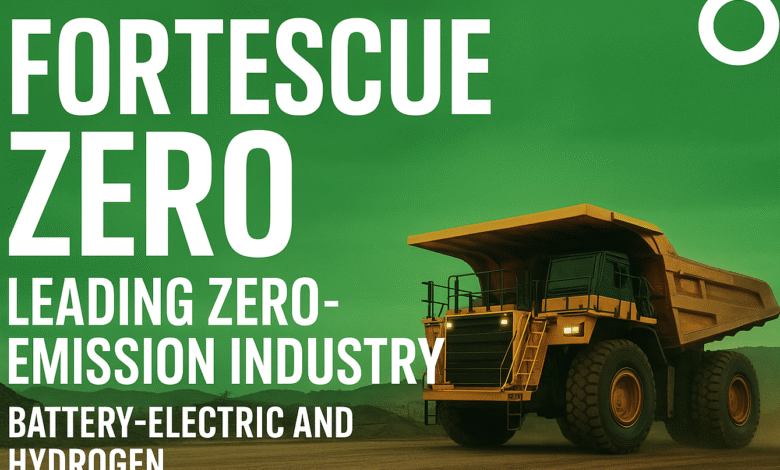
In an era defined by climate awareness and the urgent need to reduce carbon emissions, Fortescue Zero has emerged as a leading force in the decarbonisation of heavy industry. As one of the most ambitious ventures of Fortescue Metals Group, Fortescue Zero is setting a new benchmark for sustainable industrial operations, aiming not just for net-zero targets but for the complete elimination of fossil fuel emissions.
This article delves into the origins, technologies, strategies, and future prospects of Fortescue Zero, exploring how it is reshaping the industrial landscape in line with a greener, more sustainable future.
The Genesis of Fortescue Zero
Fortescue Zero was conceived as part of Fortescue’s broader Real Zero initiative, a visionary programme that seeks to achieve actual elimination of greenhouse gas emissions rather than relying solely on carbon offsets. Unlike traditional net-zero pledges, which often allow companies to compensate for emissions through external projects, Real Zero aims to remove emissions at the source.
The foundation of Fortescue Zero rests on the recognition that heavy industry, particularly mining, has historically been one of the most carbon-intensive sectors. Diesel-powered haul trucks, excavators, and other machinery are commonplace, contributing significantly to global emissions. Fortescue Zero was created to challenge this norm, offering viable, scalable alternatives that replace fossil fuel reliance with clean, renewable technologies.
Core Technologies Driving Fortescue Zero
Fortescue Zero is not merely a concept; it is a tangible force developing cutting-edge technologies designed to decarbonise heavy industry operations. Its innovations are diverse, targeting different facets of industrial machinery, energy supply, and infrastructure.
Battery-Electric Heavy Machinery
At the heart of Fortescue Zero’s technological revolution is the development of battery-electric heavy machinery. Mining trucks, excavators, and dozers traditionally powered by diesel engines are being re-engineered to operate entirely on electricity. This shift promises a significant reduction in greenhouse gas emissions, noise pollution, and operational costs over time.
The transition to battery-electric machinery also requires sophisticated energy storage solutions. Fortescue Zero is investing heavily in high-capacity batteries capable of delivering sustained power to large-scale industrial equipment. These innovations ensure that operations maintain efficiency while meeting stringent environmental standards.
Fast-Charging Infrastructure
To support the adoption of electric machinery, Fortescue Zero has pioneered fast-charging infrastructure capable of delivering multi-megawatt power to heavy vehicles. This technology addresses one of the key barriers to electrification in heavy industry: the need for rapid, reliable recharging of large battery systems.
By deploying advanced charging networks across its operational sites, Fortescue Zero ensures that machinery downtime is minimised, enabling continuous production while maintaining a low carbon footprint.
Hydrogen-Powered Solutions
In addition to battery-electric technology, Fortescue Zero is actively exploring hydrogen-powered systems. Hydrogen fuel cells offer a promising alternative for applications where battery solutions may not be practical due to weight or energy density limitations.
Hydrogen is particularly relevant for heavy transport and shipping, providing a scalable, zero-emission energy source for operations beyond conventional mining machinery. By integrating hydrogen into its decarbonisation strategy, Fortescue Zero is positioning itself at the forefront of industrial energy innovation.
Strategic Impact on Heavy Industry
Fortescue Zero’s mission goes beyond internal operations. By developing technologies that can be adopted by other companies, the initiative is creating a template for decarbonising heavy industry on a global scale.
Setting New Standards
The concept of Real Zero challenges industry norms. By focusing on the elimination of emissions rather than compensation, Fortescue Zero sets a higher benchmark for corporate responsibility. This approach encourages other industrial players to reconsider their reliance on fossil fuels and adopt similar strategies for emissions reduction.
Reducing Operational Costs
While the initial investment in electric and hydrogen technologies is significant, Fortescue Zero offers long-term financial benefits. Electric machinery reduces fuel expenses and maintenance costs, while green energy infrastructure offers stability against fluctuating fossil fuel prices. Over time, these cost savings may make zero-emission operations not only environmentally responsible but economically advantageous.
Influencing Policy and Investment
Fortescue Zero’s initiatives have broader implications for public policy and investment. By demonstrating the feasibility of zero-emission heavy industry, the venture encourages governments and financial institutions to support similar projects. This could accelerate the global transition to cleaner industrial practices and stimulate further research and development in sustainable technologies.
Challenges and Adaptation
Despite its groundbreaking innovations, Fortescue Zero faces a range of challenges. The transition from diesel to battery-electric and hydrogen-powered machinery involves complex engineering, significant capital expenditure, and logistical hurdles.
Recent restructuring efforts, including workforce reductions in some regions, reflect the reality of scaling ambitious technologies in a global industrial context. However, these adjustments are part of Fortescue Zero’s strategy to streamline operations and focus on core areas with the highest potential for impact.
The company remains committed to research and development, ensuring that its technologies continue to evolve and improve. Adaptation is central to Fortescue Zero’s philosophy: by learning from early implementations, it can refine solutions to meet the diverse needs of the mining and heavy industry sectors worldwide.
The Global Significance of Fortescue Zero
The innovations pioneered by Fortescue Zero have implications far beyond the mining sector. Heavy industry accounts for a substantial portion of global carbon emissions, and solutions developed here could be applied to construction, shipping, and other energy-intensive industries.
By demonstrating that zero-emission heavy machinery is viable, Fortescue Zero inspires confidence in the broader transition to sustainable industrial practices. Its commitment to Real Zero principles underscores the importance of tangible, measurable action in the fight against climate change.
Environmental Benefits
The environmental advantages of Fortescue Zero are substantial. Replacing diesel with battery or hydrogen power reduces greenhouse gas emissions, air pollutants, and noise levels. Ecosystems surrounding industrial operations benefit from cleaner air and reduced contamination, while global efforts to combat climate change gain a tangible boost.
Economic and Social Impact
Beyond environmental considerations, Fortescue Zero also contributes to economic and social progress. Investment in green technologies creates skilled jobs in engineering, manufacturing, and research. Communities benefit from cleaner industrial practices, and companies adopting these technologies can improve their reputations and relationships with stakeholders.
Future Prospects
Looking ahead, Fortescue Zero is poised to expand its influence and technological capabilities. The company continues to explore advancements in battery efficiency, hydrogen fuel systems, and sustainable infrastructure. Partnerships with other industrial players and governments will likely accelerate the adoption of zero-emission technologies worldwide.
Fortescue Zero’s commitment to Real Zero serves as a blueprint for future industrial decarbonisation efforts. As more companies and nations strive to meet ambitious climate goals, the innovations pioneered by Fortescue Zero will play a pivotal role in shaping a cleaner, more sustainable industrial landscape.
Conclusion
Fortescue Zero exemplifies the fusion of ambition, technology, and environmental responsibility. By targeting the decarbonisation of heavy industry through battery-electric machinery, hydrogen solutions, and advanced infrastructure, it is redefining what is possible in sectors long associated with high emissions.
The initiative’s emphasis on Real Zero, rather than offset-based net-zero pledges, represents a transformative approach to climate action. Through its technologies, strategies, and vision, Fortescue Zero not only reduces emissions but also inspires a global shift toward sustainable, zero-emission industrial practices.
As industries across the world seek ways to reconcile productivity with environmental stewardship, Fortescue Zero stands as a testament to innovation, proving that even the heaviest industries can operate sustainably without compromising efficiency or economic viability.